Read More

5.15.2011
Obsession: Tina Chow's Jewelry


 "I like the idea of wearing very personal jewelry and not so much decoration."
 --Tina Chow
What becomes a legend most?
For Tina Chow, legendary downtown darling, muse to artists such as Andy Warhol, the signature
statement pieces of her singular style came in the form of jewelry she designed in collaboration
with Shouchikudou Kosuge, a Japanese artisan.
These pieces, like Chow herself, possess an unconventional, hard beauty. Rose quartz is
wrapped in an intricate bamboo trellis; crystal amulets are wound with black string.
Read More
1.16.2011
Oh, to be a piece of Sicilian pottery

Giorgio Morandi. Bottiglie e Fruttiera. oil on canvas, 1916. collezzione Gianni Mattioli


Many blocks away from the piazza del Duomo,
which severs the industrious vein of Via Etnea, Catania’s most commercial street,
and farther away still from the infamous Fecarotta Brothers shop window,
which occupies one of Via Etnea’s prominent intersections,
I observe the morning overture of Via Umberto from my kitchen balcony.
As the waking hours dissipate and the coolness of dawn
is replaced by midday’s gleaming orange orb of light,
the streets of Via Umberto smolder into being.
Quotidian splendors unfurl beneath my eyes.
Across the street, bitter old men dressed in suits of heavy tweed line the stoops of the bus stop,
poised to resume querulous conversations with the occasional spurt of wind.
Helmeted riders stream by in their motorinos,
unleashing an acrid gurgle of petrol into the sultry morning breezes.
At the Vezzosi soda kiosk a cigarette dangles precariously from the slackened lips
of a man slicing oranges and lemons under a faded parasol.
The smoke disperses into the air.
His work finished, the apathetic attendant exits the scene,
leaving the cutting board populated with fruit.
The prospect of life, the very decision to take to the street, it seems,
is commandeered by the dizzying fragrance of lemons.
As I stir a plump yellow wedge in my black tea
the perfume of citrus splashes the walls of the kitchen parlor,
curling into the atmosphere and coloring it the same tawny serpentine
as the painted fractals that cluster on my signora’s ceramic bowls from Caltagirone.
-- from the Catania notebooks, circa March 2008
is commandeered by the dizzying fragrance of lemons.
As I stir a plump yellow wedge in my black tea
the perfume of citrus splashes the walls of the kitchen parlor,
curling into the atmosphere and coloring it the same tawny serpentine
as the painted fractals that cluster on my signora’s ceramic bowls from Caltagirone.
-- from the Catania notebooks, circa March 2008
Read More
In absentia: Apologies, the Church of Sant Apollonaire, and more musings on the mosaics of Ravenna


Ikonoklasm, via Sant'Apollinaire


"What is the force that sees the single parts, or which distinguishes the facts it knows? What is the force that gathers up the parts it has distinguished, that takes its course in order due, now rises to mingle with the things on high, and now sinks down among the things below, and then to itself brings back itself, and, so examining, refutes the false with truth? This is a cause of greater power, of more effective force by far than that which only receives the impressions of material bodies.
Yet does the passive reception come first, rousing and stirring all the strength of the mind in the living body When the eyes are smitten with a light, or the ears are struck with a voice's sound, then is the spirit's energy aroused, and, thus moved, calls upon like forms, such as it holds within itself, fits them to signs without and mingles the forms of its imagination with those which it has stored within....
--Boethius, The Consolation of Philosophy
Read More
10.25.2010
Nights in Connecticut.
Sitting in your chair, smoking your effetely rolled cigarette,
I see the image of the icy moon refracted
In the stolid waters gone black
And it is a solemn night in Connecticut
When only coyotes are killing.
Naturally, a full moon mines the passage
Envelopes our conversation in its dull supernal glow
And a small flame wicks itself
In the heat of exhaled smoke
The acrid curl of whiskey licking the throat
The heat of our young blood
On the night of the hunt.
In blood we are borne
The milk of that husky moon
And the dusky howl of the darkness that surrounds us.
Read More
9.19.2010
The Cliffs of Acitrezza
 still, La Terra Trema, reg. Luchino Visconti
“Granita with Artist” is what surfaced from this moment of suspension. You “painted” it in the truest colors you knew, in a style that demanded no flighty interpretation. You appreciated the dual coldness of representation and title—the scarcity of color gave it an almost monochrome palette, drawn out from umbers and blacks, cadmium white, bluish-greys. The title framed the entire transaction for you, condensed the drive away from the dusty city, the façade of the small pink house, the adolescents splayed out on the sciara, into one extractable essence. The truth is that you didn’t even need the painting, and that is why you preserved the image in the living pigment of memory. The sciara still spoke to you in verses of slippery stone, in labile intonations. At times, you awoke feeling the grit of the granita on your tongue and the lingering bitterness of lemon rind. And even the jackal face of the artist surfaced periodically out of the ruins of the times when you knew each other.
Read More
8.30.2010

8.28.2010
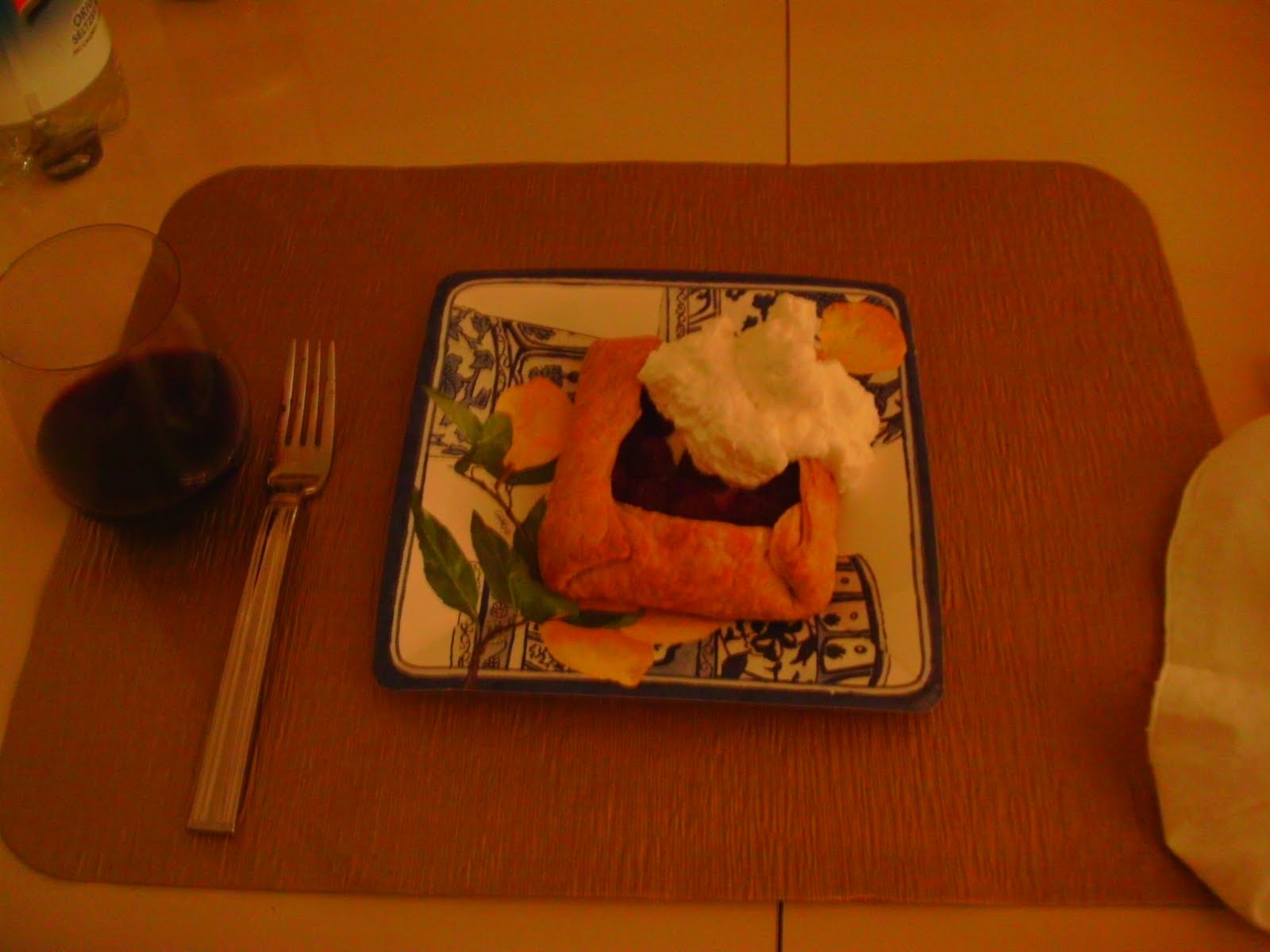
Writer's Block
 old and new copies of Vogue Italia, Vogue Paris, Fantastic Man, T Magazine
mixed with travel photos, books, and stones
Read More
8.25.2010


Sirena, alla McMenamy


 all images, courtesy of vogue.it
I am intrigued by the boundless depths of Steven Meisel's imagination.
Namely, his conceptualization for the August issue of Vogue Italia, "Water and Oil,"
portraying Kristen McMenamy as an apocalyptic sea nymph awash
in oil and couture. We arrive closer to the etymological origin
of the word decadence, to which the leggy muse McMenamy may
stand as a harbinger.
Read More
8.18.2010
Reminiscences
 ukha, la minestra russa da Io Sono L'Amore
"The first colors that made a strong impression on me
were bright, juicy green, white, carmine red, black and yellow ochre.
These memories go back to the third year of my life. I saw these colors
on various objects which are no longer as clear in my mind as the colors themselves."
-kandinsky, "Reminiscences"
Read More
8.15.2010


8.04.2010
Notes from an Italian Summer


If you've been checking in throughout the past few weeks,
you'll have already noticed my culinary obsession with italy and summer.
I often reflect on my adventures in that wonderful place, and food
(and its preparation) offers the most visceral re-connection. I offer to
the jury Phaidon's latest bookshelf marvel, Recipes from an Italian Summer,
as a potent device for rendering oneself defenseless against severe bouts of
longing for the motherland, and its delectable bounty.
You may even give in and try something completely new, such as my foray
into the delicate zucchini blossom. After many requests, I have posted my
newly vaunted recipe below.

Natalie & Lisa's ricotta-stuffed Zucchini Flowers
(Fiori di Zucca Ripieni)
what you will need:
13 - 18 cleaned zucchini flowers
3 lg eggs
1 cup fresh ricotta
1/4 cup grated parmesan
wondra/flour
fresh herbs, such as thyme, basil, parsley
cooking oil, such as canola or peanut
s&p

Step 1: assemble the filling -- in a mixing bowl, combine the ricotta, parmesan, herbs, and egg, making sure to evenly distribute the egg. add salt & pepper to taste.
(in the meantime, make sure to gingerly remove the stamens (i.e. male sexyparts)
from your zucchini flowers -- you don't want to bite into that.)
Step II: Stuffing and breading -- with a small spoon or pastry bag, fill each flower
with a dollop of filling, making sure not to add so much that the flower won't be
able to close. With your fingers, "close" and twist shut the petals of each flower.
Break the remaining eggs into a shallow bowl and whisk with a few tablespoons of
water to create an egg wash. Pour an ample amount of flour into an identical bowl, and season with salt&pepper to your liking.

Step III: Sizzle in a frying pan
Now the dance begins -- you are ready to coat the flowers in a layer of egg and flour, and
then into the frying pan. Fill a deep skillet with about 1 cup of oil, and place on high heat until the oil gets smoky.
Once you have coated the blossoms in egg and flour, fry them in the skillet no more
than 3 at a time on 1 minute per side.
Remove blossoms when thoroughly browned and
place onto a tray lined with paper towels.
each batch serves 6-8 people as antipasto (made only for the ones you love)
pairs well with an heirloom tomato panzanella
(Fiori di Zucca Ripieni)
what you will need:
13 - 18 cleaned zucchini flowers
3 lg eggs
1 cup fresh ricotta
1/4 cup grated parmesan
wondra/flour
fresh herbs, such as thyme, basil, parsley
cooking oil, such as canola or peanut
s&p

Step 1: assemble the filling -- in a mixing bowl, combine the ricotta, parmesan, herbs, and egg, making sure to evenly distribute the egg. add salt & pepper to taste.
(in the meantime, make sure to gingerly remove the stamens (i.e. male sexyparts)
from your zucchini flowers -- you don't want to bite into that.)
Step II: Stuffing and breading -- with a small spoon or pastry bag, fill each flower
with a dollop of filling, making sure not to add so much that the flower won't be
able to close. With your fingers, "close" and twist shut the petals of each flower.
Break the remaining eggs into a shallow bowl and whisk with a few tablespoons of
water to create an egg wash. Pour an ample amount of flour into an identical bowl, and season with salt&pepper to your liking.

Step III: Sizzle in a frying pan
Now the dance begins -- you are ready to coat the flowers in a layer of egg and flour, and
then into the frying pan. Fill a deep skillet with about 1 cup of oil, and place on high heat until the oil gets smoky.
Once you have coated the blossoms in egg and flour, fry them in the skillet no more
than 3 at a time on 1 minute per side.
Remove blossoms when thoroughly browned and
place onto a tray lined with paper towels.
each batch serves 6-8 people as antipasto (made only for the ones you love)
pairs well with an heirloom tomato panzanella
buon appetito!

Read More
7.27.2010
Gold Standard: Recent works by Ivy Mix


7.13.2010
Taste of Summer, pt. II

The fig makes its fashionable debut on tabletops in Italy and throughout the Mediterranean
in the warm, balmy summer months. Italians prepare them several ways, as a condiment
for meat dishes such as wild game hens, or as the opening acts -- decadent antipasti grilled or served raw with salty prosciutto. My take on the fig is below; an easy recipe perfect for large parties that combines distinctly regional flavors with seasonal ingredients.
Fichi con Ricotta dolcificata con miele (Figs with Honeyed Ricotta)
8 - 10 figs, sliced in half, lengthwise
1/3 - 1/2 cup ricotta fresca (preferably ricotta di bufala, if you can find it)
2 generous tspns honey
a good aged balsamic vinegar
On a cutting board or disposable tray, coat each fig with a drop of balsamic vinegar. Transfer
coated figs to platter. In a small mixing bowl, whip the ricotta with a spoon to lighten
the texture, gradually incorporating the honey until fully integrated and airy.
With a spoon or melon baller, "shape" ricotta into little gobs and spoon on top of
each individual fig. Make sure to only coat the center of the fig.
serves 4 - 6
buon appetito!
 figs with honeyed ricotta, assorted olives, and greek style gigante beans
Read More
7.10.2010
Taste of Summer, pt. I


Fresh vegetables, ingredients, and seafood combine in this stress-free recipe in two acts that emphasizes bold flavors and involves almost no cooking.
Tonno alla Siciliana (Tuna steaks Sicilian-style)
ingredients:
2 ahi or sashimi grade tuna steaks (approx. 2 lbs.)
4-6 good summer tomatos (jersey tomatos suggested)
1/2 cup pitted and roughly chopped kalamata olives
2-4 sprigs fresh mint
a small handful of parsley
one lemon
good italian olive oil
pepperoncino (chili flakes), salt & pepper
Act I - make the salsa cruda:
roughly chop tomatos into nice large cubes and layer into medium glass bowl w/juice
(N.B. the goal with this dish is not perfection, but rather il sapore del paese, a taste of the country. all chopped ingredients should be large enough to see and identify with the naked eye.) Lightly salt the tomatoes and let weep in the bowl.
Meanwhile, roughly chop the parsley and mint until the herb mix is unified (most of my
instructions for this dish include the word "roughly" - keep in mind, this is
an expressive dish). After a sufficient amount of liquid has accrued in the bottom of the bowl,
add the herb mix and the kalamatas and mix together gently.
Add the juice of half the lemon to the tomato-kalamata mixture and stir.
set other lemon half aside (quartered, it will serve as a table accoutrement). Next, add
a generous amount of olive oil (2-3 tblspns), and pepperoncino.
Set salsa cruda aside and let ingredients macerate for at least half an hour.
Act II - Searing the tuna
coat tuna steaks on both sides with salt and freshly ground black pepper. Brush a light layer of olive oil on both sides.
on high heat, heat a medium skillet (no extra oil required).
When the skillet is hot, add the tuna, one steak at a time (you should hear a nice sizzle). Depending on the thickness of the fish, searing each side should take less than 2 minutes per side, but keep an eye on the fish.
Finally, plate seared tuna steaks and add a generous amount of
the salsa cruda on top of the fish.
serves 2
pairs well with Sicilian white wines, such as the Inzolia variety
Tonno alla Siciliana (Tuna steaks Sicilian-style)
ingredients:
2 ahi or sashimi grade tuna steaks (approx. 2 lbs.)
4-6 good summer tomatos (jersey tomatos suggested)
1/2 cup pitted and roughly chopped kalamata olives
2-4 sprigs fresh mint
a small handful of parsley
one lemon
good italian olive oil
pepperoncino (chili flakes), salt & pepper
Act I - make the salsa cruda:
roughly chop tomatos into nice large cubes and layer into medium glass bowl w/juice
(N.B. the goal with this dish is not perfection, but rather il sapore del paese, a taste of the country. all chopped ingredients should be large enough to see and identify with the naked eye.) Lightly salt the tomatoes and let weep in the bowl.
Meanwhile, roughly chop the parsley and mint until the herb mix is unified (most of my
instructions for this dish include the word "roughly" - keep in mind, this is
an expressive dish). After a sufficient amount of liquid has accrued in the bottom of the bowl,
add the herb mix and the kalamatas and mix together gently.
Add the juice of half the lemon to the tomato-kalamata mixture and stir.
set other lemon half aside (quartered, it will serve as a table accoutrement). Next, add
a generous amount of olive oil (2-3 tblspns), and pepperoncino.
Set salsa cruda aside and let ingredients macerate for at least half an hour.
Act II - Searing the tuna
coat tuna steaks on both sides with salt and freshly ground black pepper. Brush a light layer of olive oil on both sides.
on high heat, heat a medium skillet (no extra oil required).
When the skillet is hot, add the tuna, one steak at a time (you should hear a nice sizzle). Depending on the thickness of the fish, searing each side should take less than 2 minutes per side, but keep an eye on the fish.
Finally, plate seared tuna steaks and add a generous amount of
the salsa cruda on top of the fish.
serves 2
pairs well with Sicilian white wines, such as the Inzolia variety
Read More
Obsession: The North Carolina Museum of Art's African Wing

 Yinka Shonibare at the North Carolina Museum of Art.
The North Carolina Museum of Art may not be located
in an area known for its impressive collections, but this museum refreshingly proves
any art prejudices about the South wrong.
Point in case: NCMA's exquisite African Art wing.
Stunning works by contemporary artists Yinka Shonibare
and El Anatsui join 17th and 18th century African tribal costumes and objets,
demonstrating the fertile continuum of African craft and creativity.

 African tribal costume.


 El Anatsui. Lines that Link Humanity, 2008. 18 x 25 ft.; discarded aluminum and copper wire. NCMA.
in an area known for its impressive collections, but this museum refreshingly proves
any art prejudices about the South wrong.
Point in case: NCMA's exquisite African Art wing.
Stunning works by contemporary artists Yinka Shonibare
and El Anatsui join 17th and 18th century African tribal costumes and objets,
demonstrating the fertile continuum of African craft and creativity.

 African tribal costume.

 El Anatsui. Lines that Link Humanity, 2008. 18 x 25 ft.; discarded aluminum and copper wire. NCMA.
Read More
Subscribe to:
Posts (Atom)